

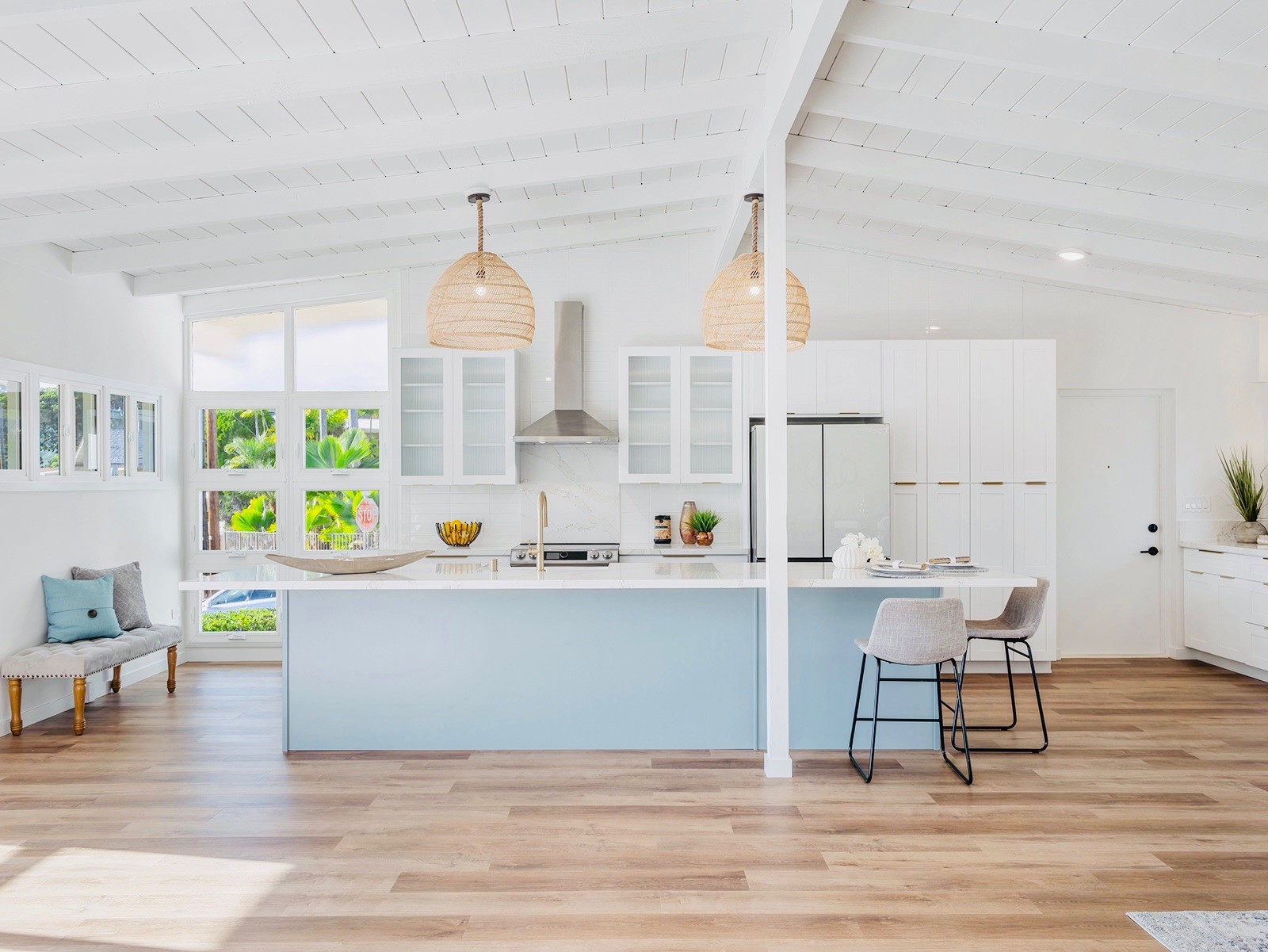
A kitchen floor in Upper Marlboro has to handle more than the occasional dropped ice cube. It sees splashed dog bowls, oil near the range, chair legs scraping at breakfast, and the steady traffic that comes with real family life. That is why so many homeowners looking for a practical update start with materials built for moisture, easier cleanup, and fewer worries day to day.
What makes luxury vinyl work so well in kitchens
The biggest advantage is simple: water resistance changes the way a kitchen floor lives. Unlike wood, which can react to repeated moisture exposure, vinyl plank is designed to shrug off the small spills and damp mopping that happen in busy cooking spaces. That matters in a room where messes are not rare accidents but part of the routine.
Construction matters too. Many kitchen products use either SPC or WPC cores. SPC is denser and often feels a bit firmer underfoot, which can help in high-traffic homes or where you want stronger dent resistance from stools and appliances. WPC has a little more give, which some homeowners prefer if they spend a lot of time standing at the counter. If you are comparing styles, our luxury vinyl catalog is a useful place to see how different visuals and constructions fit kitchen spaces.
Spills are only part of the story
A floor can be waterproof and still disappoint you if the wear layer is too thin for the way you live. In kitchens, we usually tell homeowners to look closely at scratch resistance, texture, and how easily crumbs and dust show on the surface. A very dark, glossy plank may look sharp on day one, but a lower-sheen finish with some grain variation is often easier to live with.
This is also where brand construction can make a real difference. If you want a product line known for dependable waterproof performance, COREtec luxury vinyl is a strong benchmark because its rigid core and attached pad can help with comfort and noise while standing up to kitchen traffic. For a deeper look at core types, wear layers, and what “waterproof” really means in practice, our waterproof flooring guide breaks down the details in plain language.
Installation is what protects the investment
Even a well-made plank can underperform if the subfloor is uneven or the perimeter spacing is wrong. Kitchens often hide small issues like slight dips, old adhesive, or transitions into nearby rooms, and those details affect how the finished floor feels and wears over time. A careful install helps prevent movement, edge stress, and the hollow spots people sometimes mistake for product failure.
That is why we pay so much attention to prep before boards start going down. Our vinyl plank installation process focuses on subfloor condition, layout planning, and clean transitions so the floor performs the way it should after the crew leaves. In Prince George's County, that practical side of the project often matters as much as the color you choose.
How to choose a look you will still like in five years
Kitchen trends move fast, but flooring is not something most people want to replace every few seasons. A smart approach is to choose a wood-look plank with enough character to feel warm, but not so much contrast that every cabinet or wall-paint change fights with it. Mid-tone oaks, soft browns, and muted greige planks tend to stay flexible as the rest of the room evolves.
If you are trying to picture how different tones might read in your own home, it helps to look at finished spaces instead of tiny sample chips alone. Our project inspiration gallery can help you compare color direction, plank width, and overall room balance before you commit. That is especially helpful in Maryland homes, where open kitchen layouts often connect directly into family rooms and entry areas.
If your kitchen is ready for a floor that can handle spills without asking you to baby it, you can start planning with our free estimate.


