

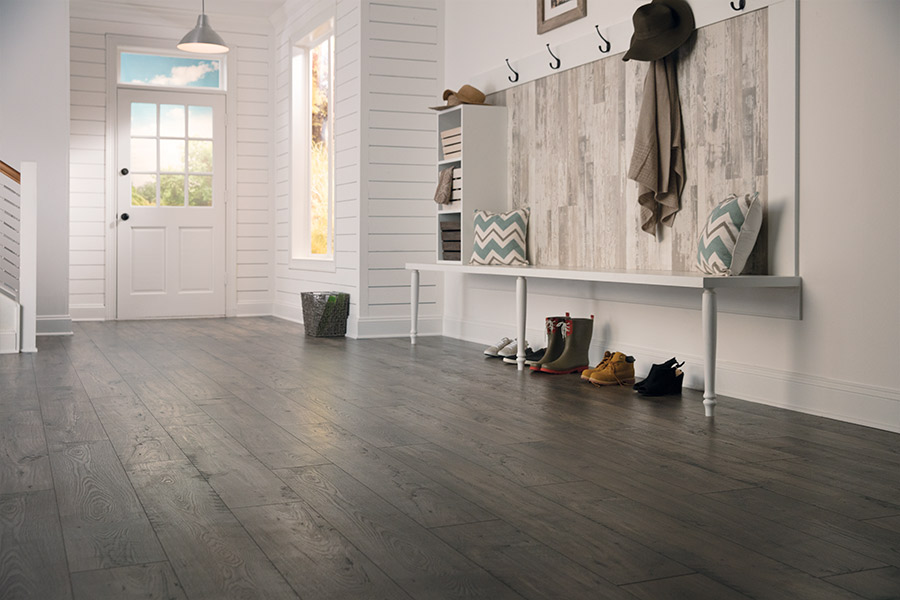
In the highly active DMV real estate market, homeowners frequently update floors before moving in or right before listing a home for sale. While upgrading is always a smart move, one of the biggest mistakes homeowners make is “chopping up” their floorplan with too many different materials.
You don’t have to install the exact same material in every single room—in fact, putting hardwood in a high-moisture laundry room is a bad idea. The secret to a high-end, professionally designed home lies entirely in how you manage the transitions.
The Transition Matchmaker Tool
Mixing hard surfaces with soft surfaces is easy. Mixing two wood-look floors together? That’s where things get dangerous. Use our interactive tool below to check if your flooring combination is a design “Do” or a “Don’t.”
Transition Design Checker
Select two adjacent floors to check their compatibility.
▲ Pick both floors to see the verdict.
🛑 Design Clash Warning
Never place wood-look vinyl or laminate directly next to real hardwood. The printed grain will look artificial by comparison. Try using a stone-look tile or plush carpet as a visual buffer instead.
⚠️ Proceed with Caution
Changing from one wood color or grain directly to another can look like a patchwork mistake. If you must do this, ensure the planks run in opposite directions (e.g., horizontal meeting vertical) at the doorway to make it look intentional.
⚠️ Warning: Seam Issues
Changing from one carpet color to another in a doorway can be tricky to seam properly without fraying. Ensure you use a high-quality transition strip or Z-bar to hold the carpets down tightly.
✅ Excellent Combination
This is a classic, safe transition! Because the textures contrast heavily, it looks intentional and high-end. Just make sure your installer uses the correct T-molding or Reducer strip to manage any height differences.
The Golden Rules of Mixing Materials
To pull off multiple flooring types without making your home feel disjointed, stick to these professional design strategies:
1. Never mix “Fake” Wood with “Real” Wood
If you have gorgeous, original hardwood in your hallway, do not transition it directly into a wood-look luxury vinyl or laminate in the kitchen. Even the best printed grains look distinctly artificial when placed directly next to the real thing. Instead, switch to a stone-look vinyl or tile to create a deliberate, elegant contrast.
2. Manage the Height Difference
Plush carpet with a thick pad sits much higher than sheet vinyl or LVP. When joining floors of different heights, you absolutely must use a professional reducer strip. Without it, the transition becomes a dangerous tripping hazard and the edges of your flooring will chip and fray over time.
3. Use the Doorway as Your Border
Never change flooring types in the middle of a hallway or an open archway. Transitions should only happen under a doorway. The seam (usually covered by a T-molding) should be perfectly aligned so that when the door is closed, you cannot see the hallway floor from inside the bedroom, and vice versa.
How Layout Changes the Rules
The architecture of your DMV home dictates how much freedom you have. Toggle your home’s layout below to see how the rules apply to your specific floorplan.
Modern Open Concept Rules
If your kitchen, dining, and living room are all visible to each other with no dividing walls:
- Continuous is King: You should use exactly one flooring type throughout the entire open space. This makes the home feel significantly larger and highly boosts resale value.
- Best Materials: Luxury Vinyl is ideal here, because it can flow seamlessly from the dry living room straight into the spill-prone kitchen without fear of water damage.
- How to break it up: Use large, high-quality area rugs to visually separate the “dining room” from the “living room” instead of changing the hard surface beneath them.
Traditional / Closed Layout Rules
If your home features defined rooms separated by distinct doorways and hallways:
- More Freedom: You can safely mix and match! It is perfectly acceptable to have hardwood in the hallway and switch to a highly durable carpet tile for your enclosed home office or den.
- The Sightline Test: Stand in the hallway with all the doors open. Ensure the colors don’t wildly clash. Keep the undertones consistent (e.g., pair warm wood with warm-toned carpets, not cool gray ones).
Worried about awkward transitions, height differences, or mismatched undertones?
Let our experts assess your floorplan and handle the tricky details.


