

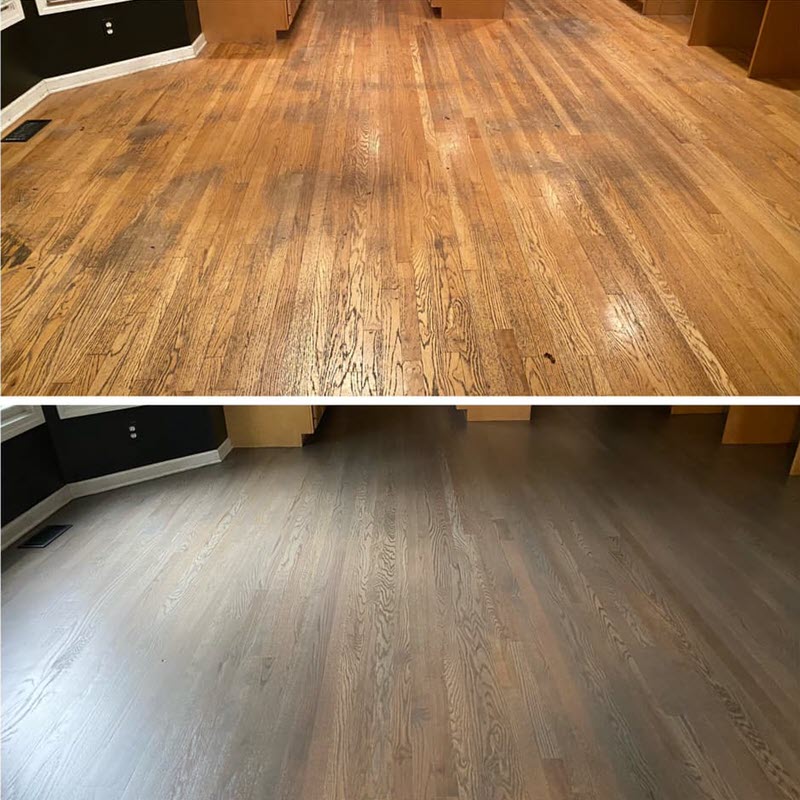
There is no better feeling during a home renovation than pulling up a corner of stained, 20-year-old carpet and discovering original hardwood hiding underneath. Because the DMV area is filled with historic and mid-century homes, this happens a lot.
But that excitement usually fades when you pull up the rest of the carpet. You might find pet stains, deep gouges, sun-faded patches, or even signs of water damage. At this point, every homeowner faces the exact same dilemma: Is this floor worth saving, or is it cheaper to just cover it up with something new?
The Floor Damage Diagnostic Tool
Not all damage is created equal. Some terrifying-looking scratches can be erased in a day, while subtle warping might require a complete tear-out. Select the primary symptom of your old floor below to get an instant expert verdict.
Select Your Floor’s Symptom:
Surface Wear & Tear
If the floor just looks “tired,” faded from the sun, or has light scratches from dog nails that don’t catch your fingernail, you are in luck. A professional sand and refinish will strip away the old polyurethane and make this floor look brand new. This is the absolute best-case scenario.
Deep Structural Scratches
If someone dragged a heavy refrigerator across the room and took chunks out of the wood, a standard sanding won’t fix it. The damaged boards will need to be surgically removed, replaced with matching species wood, and then the entire floor must be sanded and stained so it blends. It’s fixable, but labor-intensive.
Deep Black Stains
Those black spots under the old carpet are usually pet urine or old radiator leaks. Ammonia chemically burns the wood fibers deep down. Sanding often won’t remove black stains. You either have to replace the stained boards, or stain the entire floor a very dark espresso color to hide them.
Cupping, Crowning & Warping
If the edges of the boards are curled up (cupping) or the floor feels wavy, the wood has sustained severe moisture damage from the subfloor. Sanding this flat will ruin the structural integrity of the planks. You need to identify the moisture source, tear the wood out, and replace the floor.
The “Plan B” Pivot Grid
So, the expert verdict is in, and unfortunately, your old floors are too damaged or too thin to be sanded down again. Don’t panic. You have incredible options to cover or replace them. Click your #1 priority below to reveal your perfect “Plan B” flooring choice.
Luxury Vinyl Plank (LVP)
If you don’t want to worry about wood ever again, float a 100% waterproof LVP floor right over the old subfloor. It looks like wood, but acts like armor.
Modern Laminate
Don’t want to pay for real hardwood installation? Today’s laminate flooring offers incredibly realistic textures and extreme scratch resistance at a fraction of the cost.
New Hardwood
Tear out the old, ruined wood and do a fresh hardwood installation. It is the gold standard for home appraisers and guarantees a premium return on investment.
Plush Carpet
If the damaged wood is in a bedroom or upstairs hallway, don’t overthink it. Installing thick, premium carpet solves the aesthetic problem instantly while adding warmth and soundproofing.
When in Doubt, Get an On-Site Opinion
Trying to guess the thickness of your wood’s wear layer or the depth of a water stain from a YouTube video is a recipe for disaster. Before you rent a heavy floor sander from a hardware store and accidentally grind through to the nails, let a professional take a look.
Not sure if your old floors can be saved or if they need to be replaced?
We will assess the damage, measure the wear layer, and give you honest options.


